Land Development in Alberta offers long-term opportunity for investors who understand how land is transformed through planning, approvals, and disciplined execution. This guide breaks down the development process step by step, helping investors evaluate risk, timelines, and value creation with clarity.
Land Development in Alberta is a long-term investment strategy built on planning, patience, and precision. Unlike traditional real estate investments that rely on immediate rental income, land development creates value by moving property through defined stages that reduce uncertainty and unlock future potential.
For investors exploring Alberta’s regional and emerging markets, understanding how land development works is essential. This step-by-step guide outlines the process, risks, and value drivers behind successful land development projects.
Step 1: Understanding Land Development in Alberta
Land Development in Alberta is governed primarily at the municipal level. Each municipality controls zoning, land use, density, and development approvals, which means project feasibility can vary significantly from one location to another.
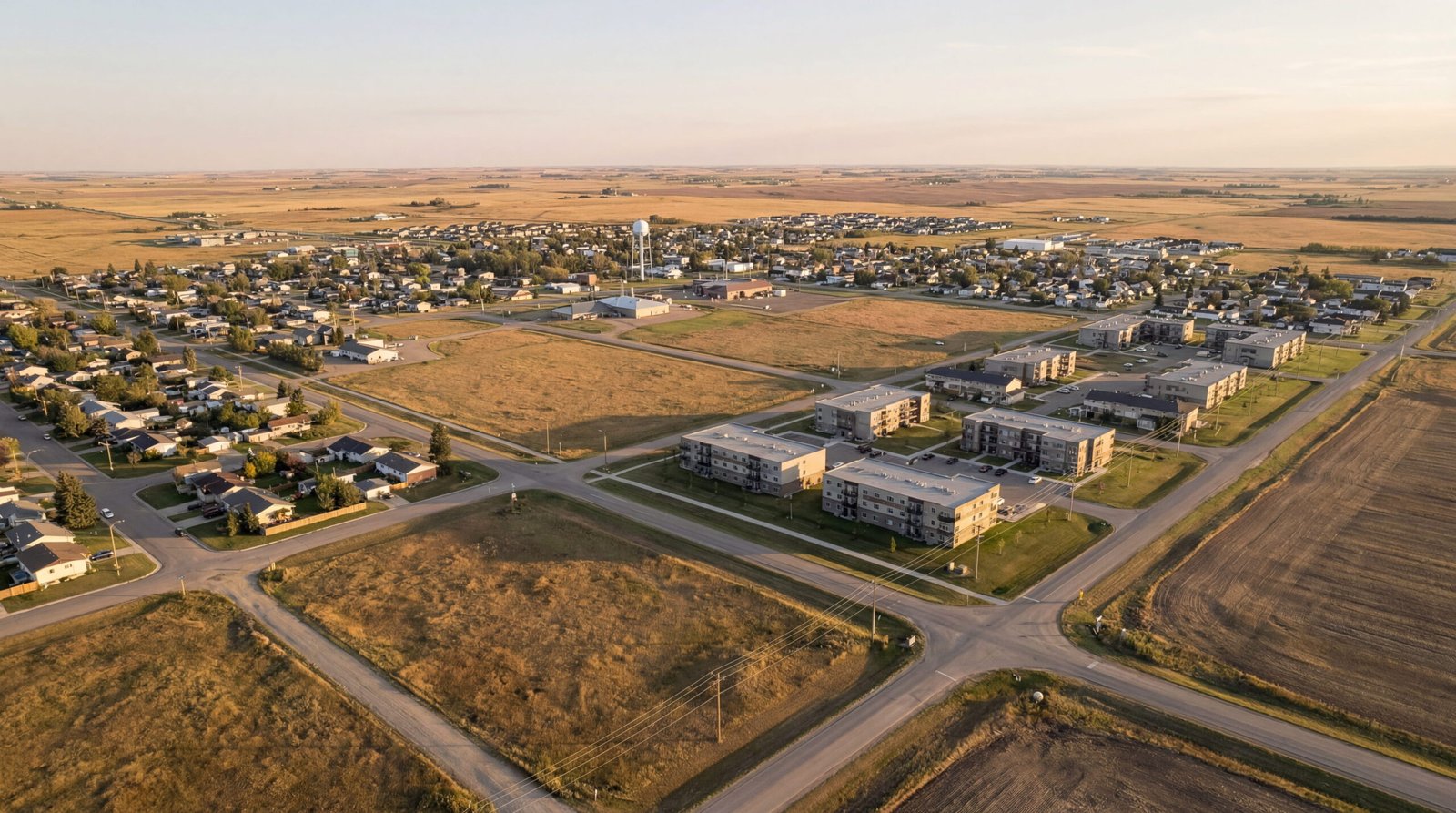
Smaller Alberta municipalities often present compelling opportunities due to housing shortages, population growth, and infrastructure investment. Investors who understand local planning frameworks are better positioned to identify land with long-term development potential rather than speculative upside.
Step 2: Land Acquisition and Due Diligence
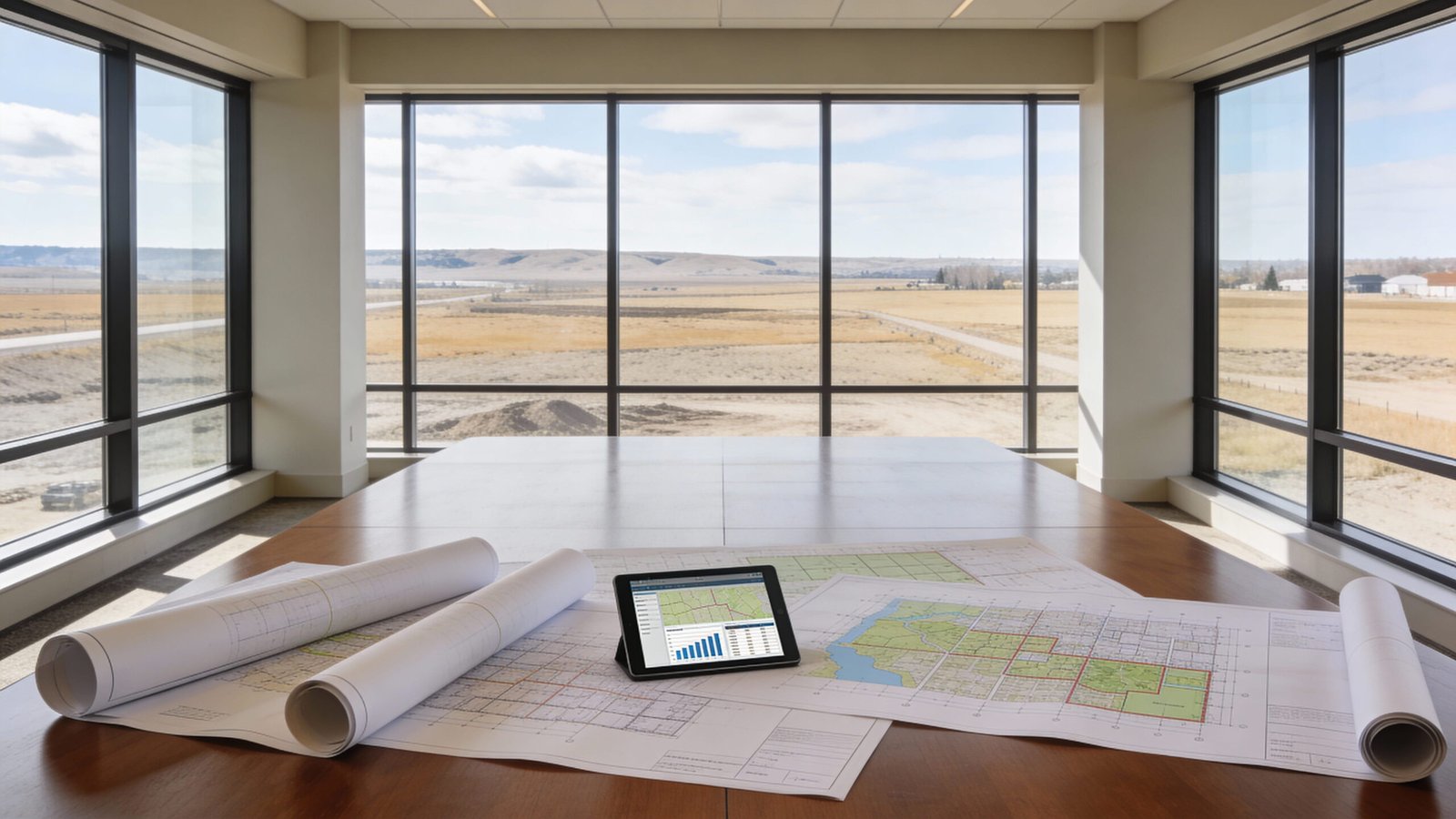
Every successful Land Development in Alberta project begins with thorough due diligence. This stage determines whether a site can realistically progress toward development.
Key factors include zoning classification, servicing availability, environmental constraints, access points, and surrounding land use. Market demand is equally important, as land must support a use that aligns with real housing or infrastructure needs.
Investors should never underestimate the importance of disciplined due diligence, as early mistakes are often the most costly.
Step 3: Market Feasibility and Demand Analysis
Market feasibility ensures that a proposed development aligns with local demand. In Alberta, this often involves analyzing population growth, employment stability, rental supply, and household composition.
Purpose-built rental developments are increasingly relevant in regional markets where supply has not kept pace with demand. Projects grounded in data rather than assumptions are more resilient to market shifts.
Population and housing data can be reviewed through Statistics Canada for additional insight:
Step 4: Zoning, Policy, and Municipal Approvals
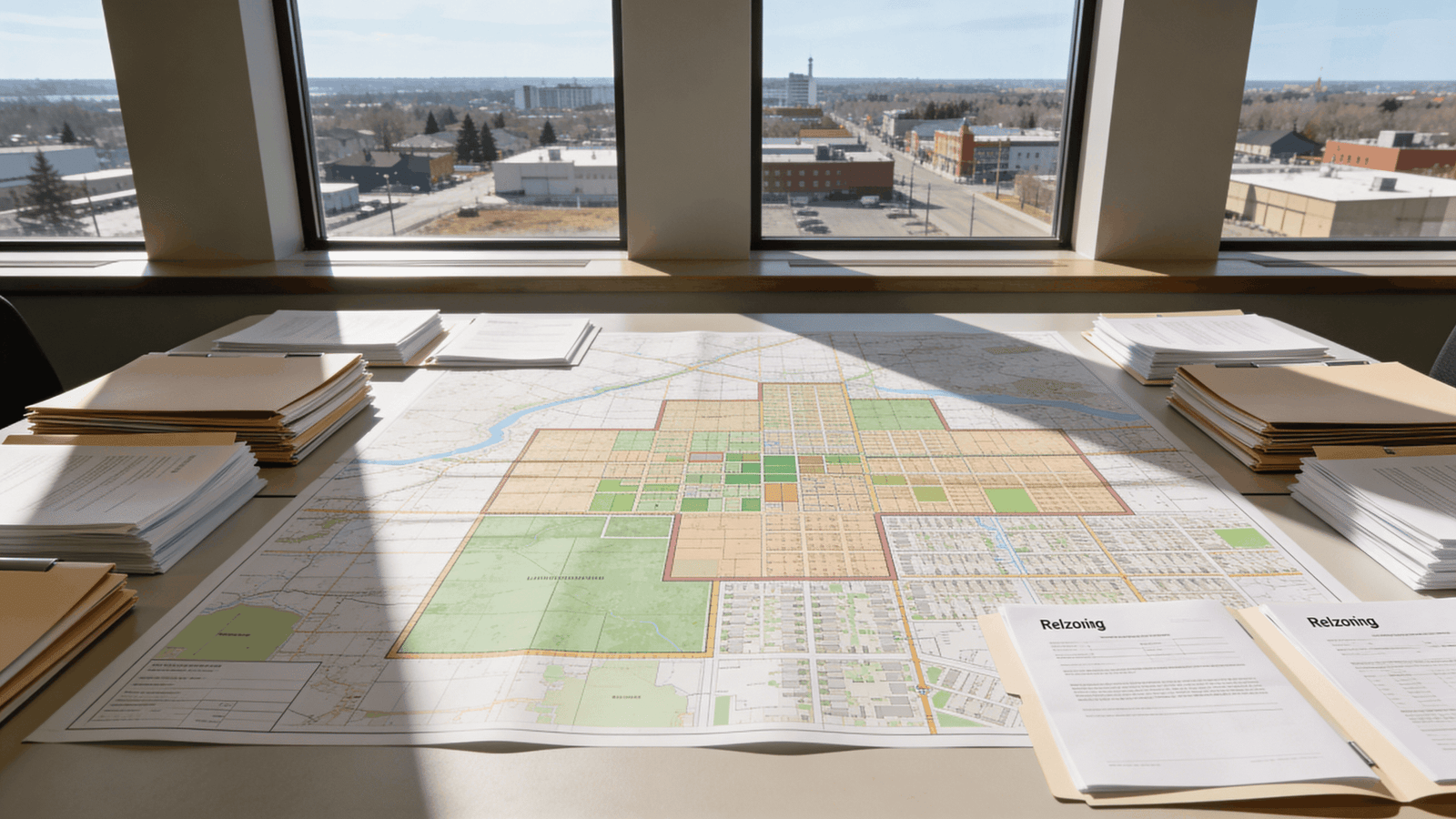
Zoning and approvals are a defining phase in Land Development in Alberta. This stage introduces regulatory risk but also significant value creation.
Projects may require rezoning, development permits, or subdivision approval. Developments that align with municipal growth strategies and housing priorities often experience smoother approval processes and stronger long-term support.
The Municipal Government Act provides the legal framework for land use planning across Alberta:
https://www.alberta.ca/municipal-government-act.aspx
Step 5: Servicing and Infrastructure Planning
Servicing determines whether land can transition from raw to build-ready. Water, sewer, power, road access, and stormwater management all play a critical role in feasibility.
In many Alberta municipalities, servicing capacity can be a major constraint or a major advantage. Clarifying infrastructure requirements reduces uncertainty and materially increases land value.
Step 6: Understanding Risk in Land Development
Risk in Land Development in Alberta is largely front-loaded. The majority of uncertainty exists before zoning, approvals, and servicing are secured.
Common risks include regulatory delays, infrastructure costs, and changing market conditions. Experienced developers mitigate these risks through conservative assumptions, phased development strategies, and close coordination with municipalities.
Investors should focus on projects where risks are identified early and actively managed.
Step 7: Timelines and Capital Patience
Land development is not a short-term strategy. Timelines can span multiple years depending on project complexity, approvals, and market conditions.
Investors who understand this timeline are better positioned to remain patient and avoid unnecessary pressure on decision-making. In land development, patience is often a competitive advantage.
Step 8: Exit Strategies and Value Creation
Land Development in Alberta offers multiple exit paths. Depending on the project, land may be sold after entitlements are secured, partnered with builders, or advanced into vertical development.
Value is created by reducing uncertainty. Each completed stage increases certainty and strengthens the land’s appeal to future stakeholders.
Step 9: Why Investor Education Matters
Educated investors contribute to stronger development outcomes. Understanding risk, timelines, and municipal processes leads to better alignment between capital and execution.
At Badlands Development, investor education is foundational. Clear expectations, disciplined planning, and long-term thinking support projects that create durable value for both communities and investors.
To explore related insights, visit our Investor Education, Development Process, and Projects & Case Studies pages.