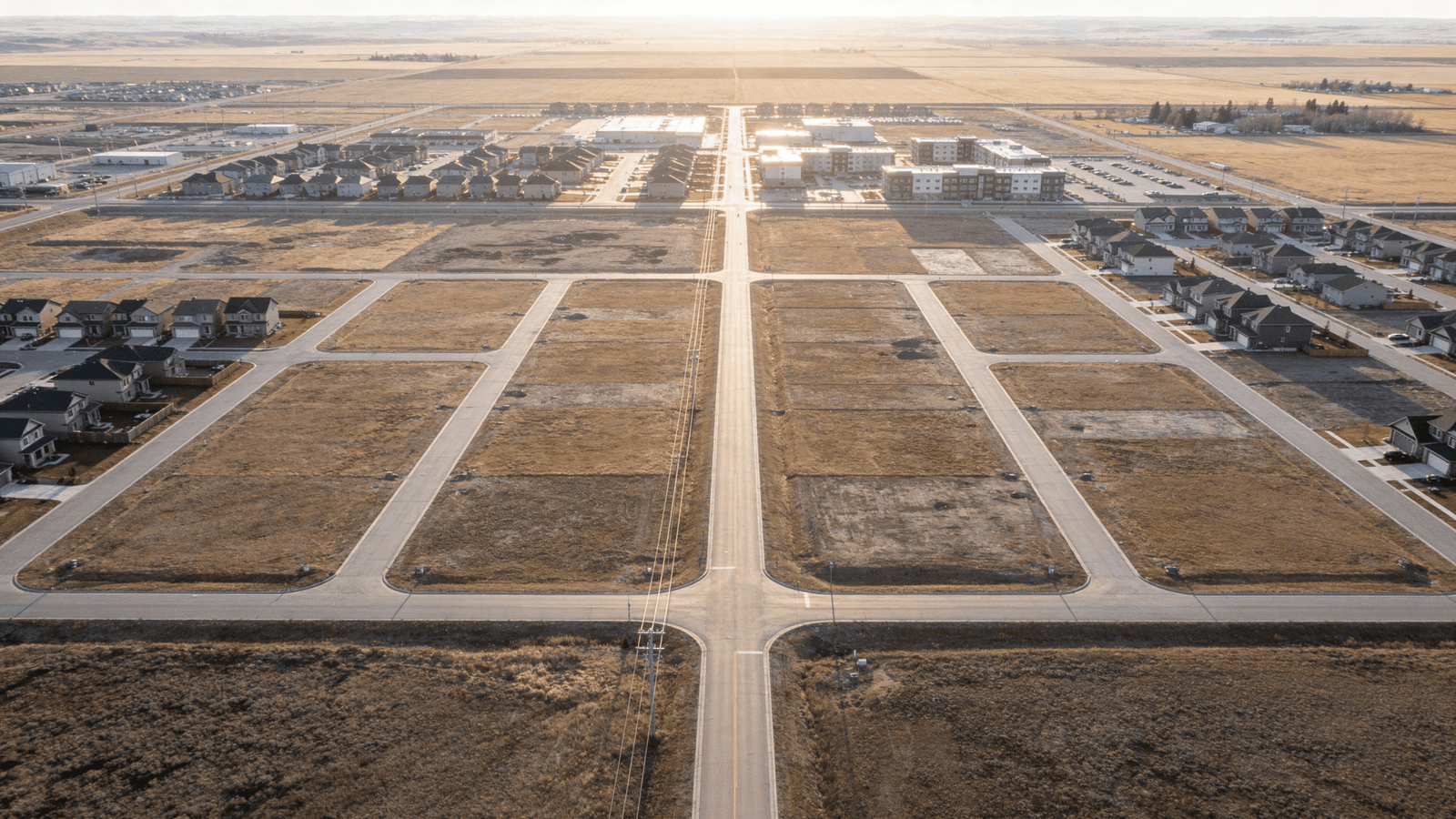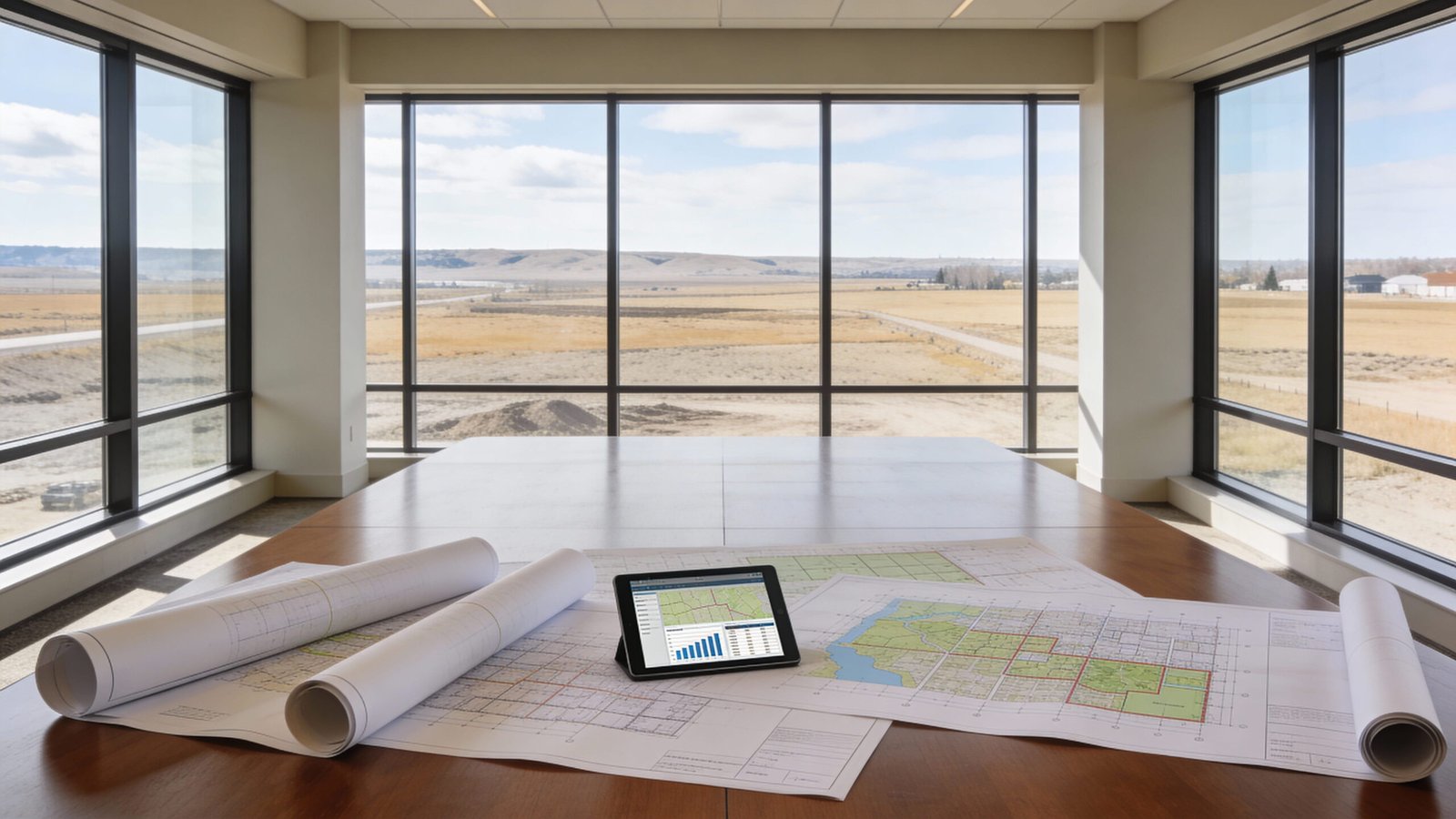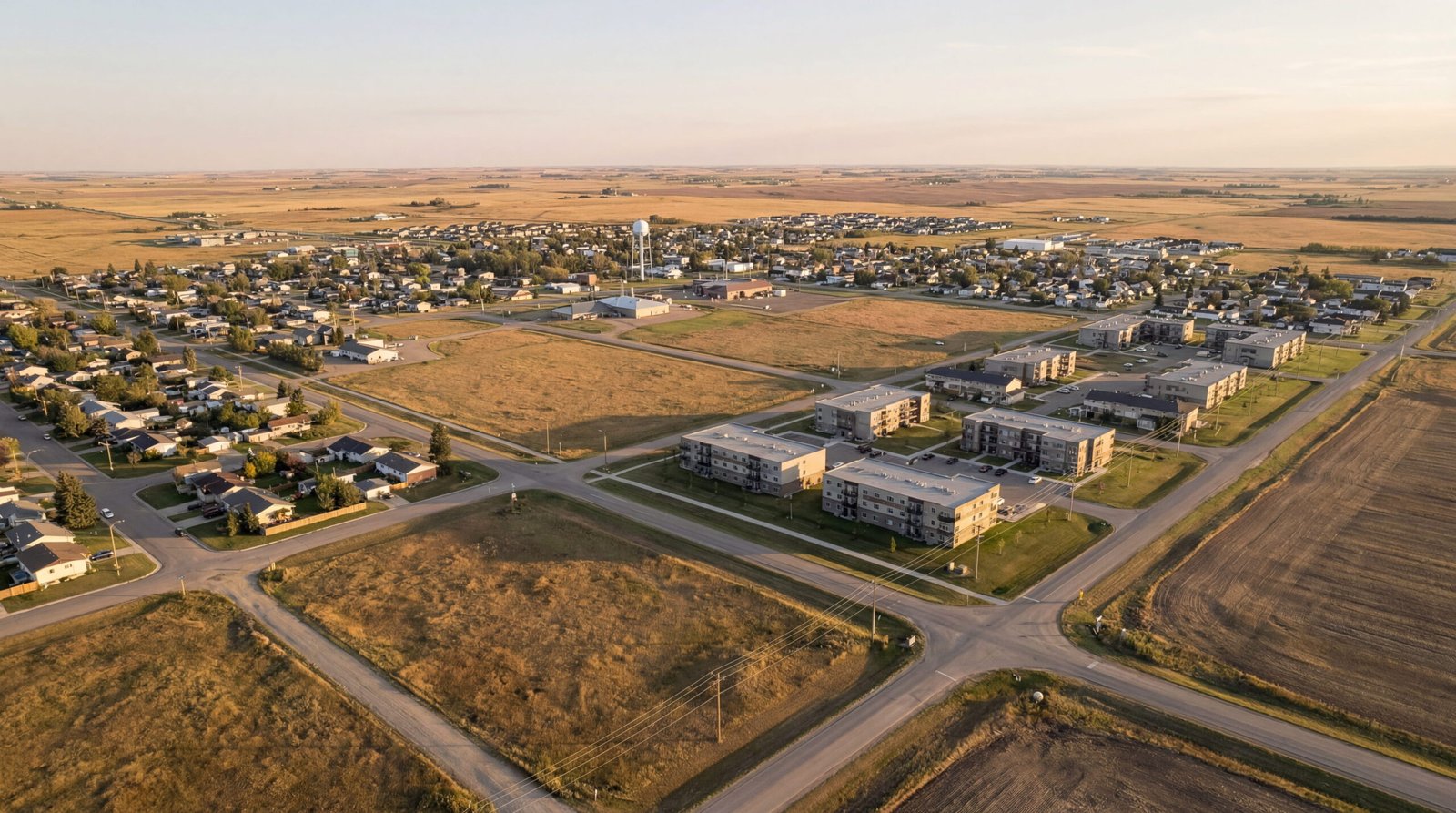
Land Rezoning in Alberta is one of the most misunderstood stages of the development process. This guide explains how rezoning works, what influences timelines, and what investors should realistically expect before land becomes development-ready.
Land Rezoning in Alberta is a critical step in the land development process and one of the largest sources of uncertainty for investors. While rezoning is often discussed as a single event, it is actually a structured, multi-stage process governed by municipal policy, public consultation, and regulatory review.
Understanding how rezoning works and how long it realistically takes helps investors evaluate risk, set accurate timelines, and avoid costly assumptions.
What Rezoning Means in Alberta
Land Rezoning in Alberta refers to changing the permitted use or density of a parcel of land under a municipality’s Land Use Bylaw. Zoning determines what can be built, how dense a development can be, and how land integrates into the surrounding community.
Rezoning does not guarantee development approval, but it is often a necessary step before land can move toward build-ready status.
Step 1: Identifying the Need for Rezoning
Not all land requires rezoning. Some parcels are already zoned appropriately but may still require development permits.
Rezoning is typically required when:
- The proposed use differs from current zoning
- Higher density is needed
- Mixed-use or rental development is proposed
- Municipal plans have evolved since the zoning was established
Early identification of rezoning requirements is essential in Land Rezoning in Alberta.
Step 2: Municipal Planning Alignment
Municipal alignment is one of the most important factors influencing rezoning success. Alberta municipalities operate under long-term planning documents such as Municipal Development Plans and Area Structure Plans.
Rezoning applications that align with these plans are more likely to move forward efficiently. Projects that conflict with long-term municipal vision often face delays or denial.
The legal framework governing this process is outlined in Alberta’s Municipal Government Act:
Step 3: Application Preparation and Submission
A rezoning application typically includes:
- Planning rationale
- Site context analysis
- Supporting studies (traffic, servicing, environmental)
- Conceptual development plans
The quality of the application plays a major role in how smoothly Land Rezoning in Alberta progresses. Incomplete or poorly justified applications often lead to requests for revisions, extending timelines.
Step 4: Public Engagement and Consultation
Public engagement is a required component of rezoning. Municipalities may notify nearby residents, host public hearings, or request additional consultation depending on the scale of the project.
Community feedback can influence conditions, density, or design requirements. Projects that address community concerns proactively tend to move more smoothly through the process.
Step 5: Administrative Review and Recommendations
Once submitted, the application undergoes review by municipal planning staff and technical departments. This stage assesses compliance with policy, infrastructure capacity, and community impact.
Planning staff typically prepare a recommendation for council. Positive recommendations significantly improve approval outcomes, while unresolved concerns can lead to deferrals.
Step 6: Council Decision and Approval
Final rezoning decisions are made by municipal council. Council may approve, deny, or request modifications to the application.
Council timelines vary by municipality, meeting schedules, and application complexity. This step represents the most visible milestone in Land Rezoning in Alberta but is supported by months of preparatory work.
How Long Land Rezoning in Alberta Really Takes
Rezoning timelines vary widely. While simple rezonings may be completed in six to nine months, more complex applications often take twelve to twenty-four months or longer.
Factors that influence timelines include:
- Municipal workload and staffing
- Application completeness
- Public feedback
- Infrastructure constraints
- Policy alignment
Investors should approach rezoning timelines conservatively and avoid relying on best-case scenarios.
Rezoning Risk and Investor Considerations
Land Rezoning in Alberta carries front-loaded risk. Capital is often deployed before certainty is achieved.
Key investor considerations include:
- Carrying costs during rezoning
- Flexibility in project scope
- Alignment with municipal priorities
- Experience of the development team
Well-managed rezoning reduces uncertainty and increases land value significantly.
Why Rezoning Knowledge Matters for Investors
Rezoning is not a shortcut. It is a structured process that rewards preparation, patience, and alignment.
Investors who understand Land Rezoning in Alberta are better positioned to evaluate opportunities, manage expectations, and participate in development projects with clarity.
To learn more, explore our Development Process, Investor Education, and Projects & Case Studies sections.